
Thailand's data center boom is accelerating. Tech giants, including Amazon, Google, TikTok and Microsoft are among those reportedly investing billions of dollars in data center projects across Thailand.
The country aims to have 1 gigawatt (GW) of data center capacity by 2027, a stark leap from the roughly 350 megawatts (MW) available in 2024, mainly to service AI workloads.
In 2025 alone, Thailand's Board of Investment reportedly approved 36 projects worth about $23 billion, followed by at least seven more facilities valued at $3.1 billion in January 2026.
According to announcements from the board of investment, most of the new data centers are planned or being built in Chonburi and Rayong provinces, east of Bangkok, within the Eastern Economic Corridor (EEC) special economic zone.
Established in the late 2010s, the EEC combines traditionally agricultural areas with existing industrial zones, particularly those dominated by petrochemical industries, a shift that has heightened tensions with local communities reportedly facing water shortages, allegedly illegal toxic waste dumping, oil spills, and industrial wastewater discharges.
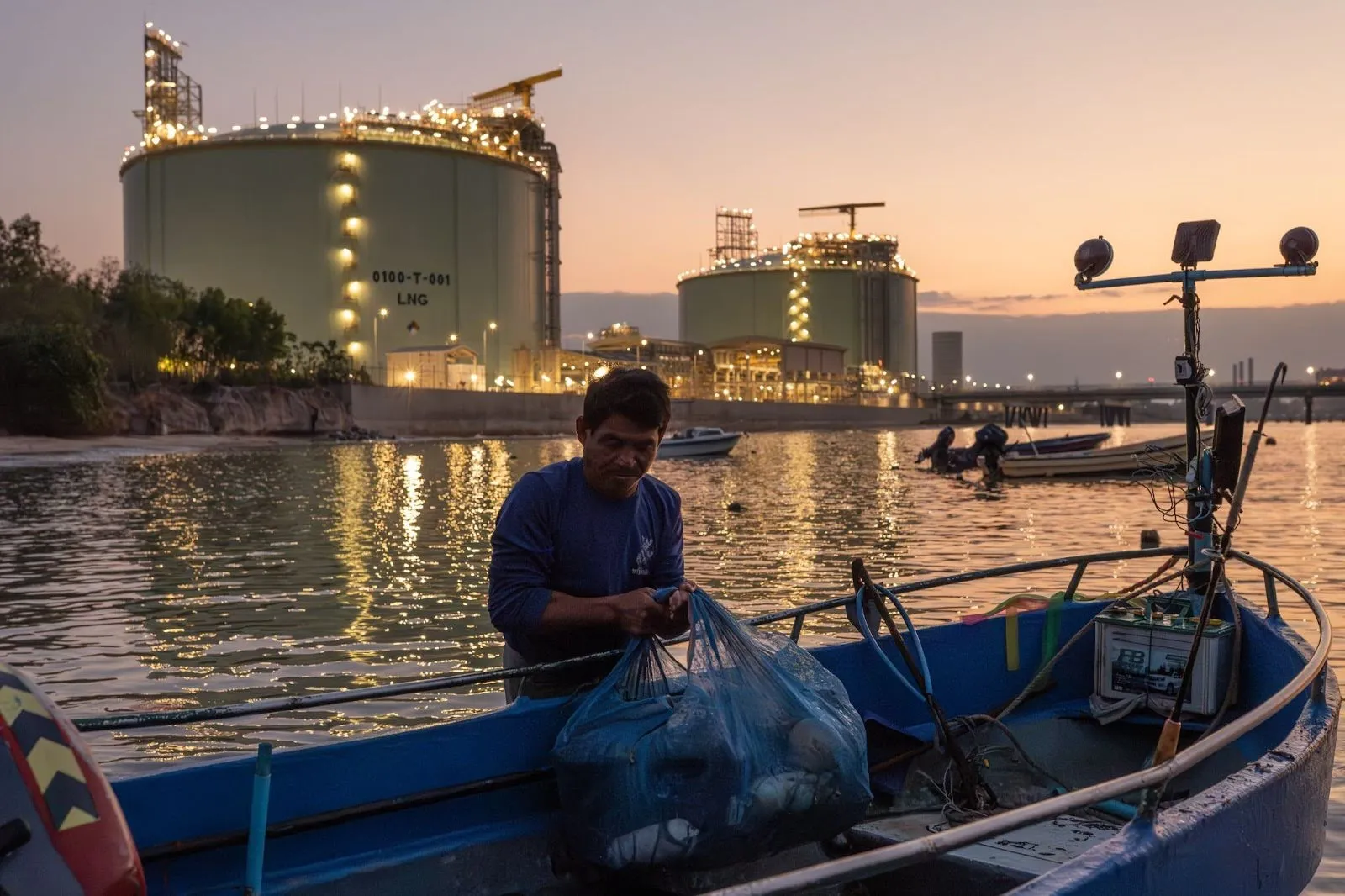
Now, some local residents fear that the EEC's water stress, pollution risks, and conflicts with local communities are set to intensify in tandem with data center growth.
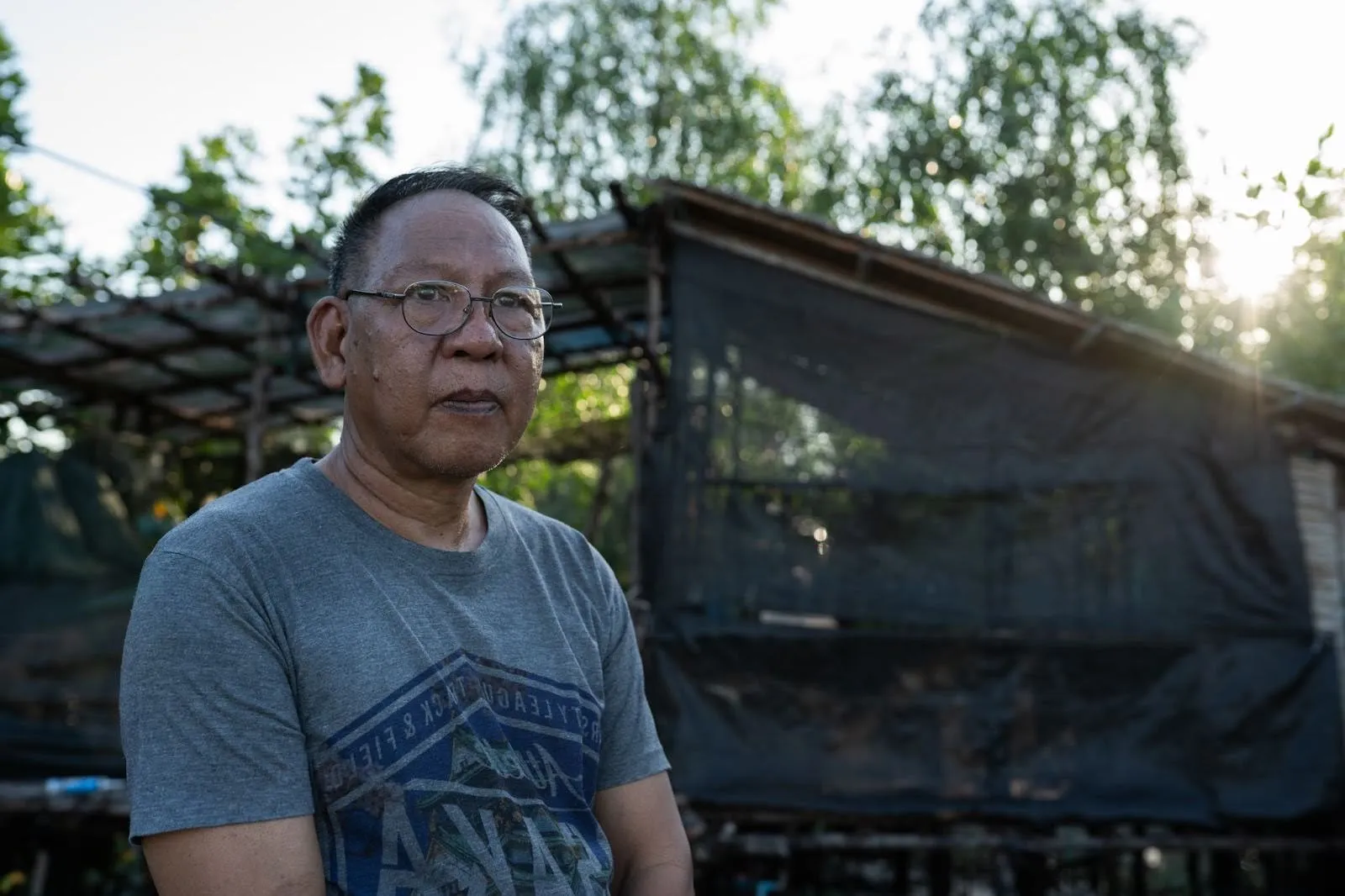
"Very few people know about these plans for the data centers," said Chaweerat Phanprasirt, a veteran environmental activist who lives near the construction site of a data center in Chonburi.
"There's been no consultation with the communities; we don't get to know anything about the new investors or the government's plans."
Reporters reached out to the Thai Data Center Association, the Board of Investment, the Ministry of Digital Economy and Society, and the Eastern Economic Corridor Office. To date, none have offered comment.
Communities fear water conflicts with data centers and industry
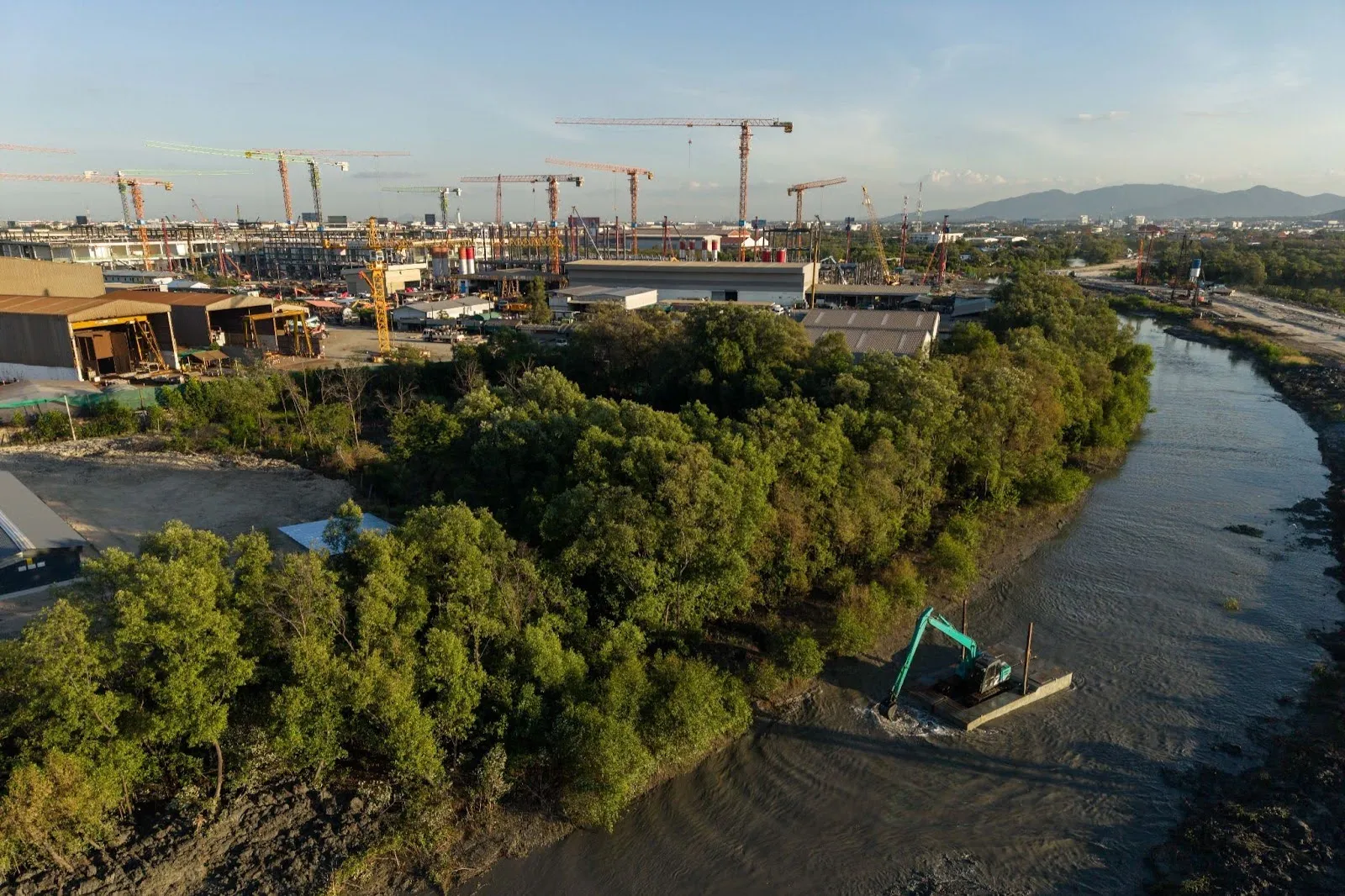
Chonburi currently hosts at least four data centers with a combined capacity of 78 MW, but reporters identified at least 11 more facilities either planned or under construction, based on publicly available information. Those being built include a 200 MW hyperscale data center in Khlong Tamru subdistrict, possibly one of the most powerful in Chonburi.
Developed by Singapore-based Bridge Data centers, the facility — known as QHI01 — heralds a dramatic spike in water demand. The company said it has secured $2.8 billion in bank financing to develop data centers across Thailand, Malaysia and beyond.
A company press release states that the company has signed a 10-year agreement with Thailand's Eastwater Stecon Utilities Co., Ltd., (EWS), a joint venture between private water utility East Water and Stecon Power, a subsidiary of engineering firm Stecon Group.
The agreement will see EWS supply the data center with 3.3 million cubic meters of water per year, about 9,000 cubic meters a day — equivalent to the annual water use of 36,900 residents, according to ERC's calculations based on figures from a 2024 study on water consumption in the EEC area.
Contractors involved in laying the water pipelines, however, told ERC the actual demand would be a third higher — around 12,000 cubic meters per day, or 4.38 million cubic meters annually. None knew where the water would ultimately be sourced from. Bridge Data Centres and East Water did not provide answers to written questions by the time of publication.
East Water's website notes that parts of Chonburi and neighboring Chachoengsao province already face high levels of water risk, with scarcity affecting agriculture, households, and industry among the region's sustainability risks.
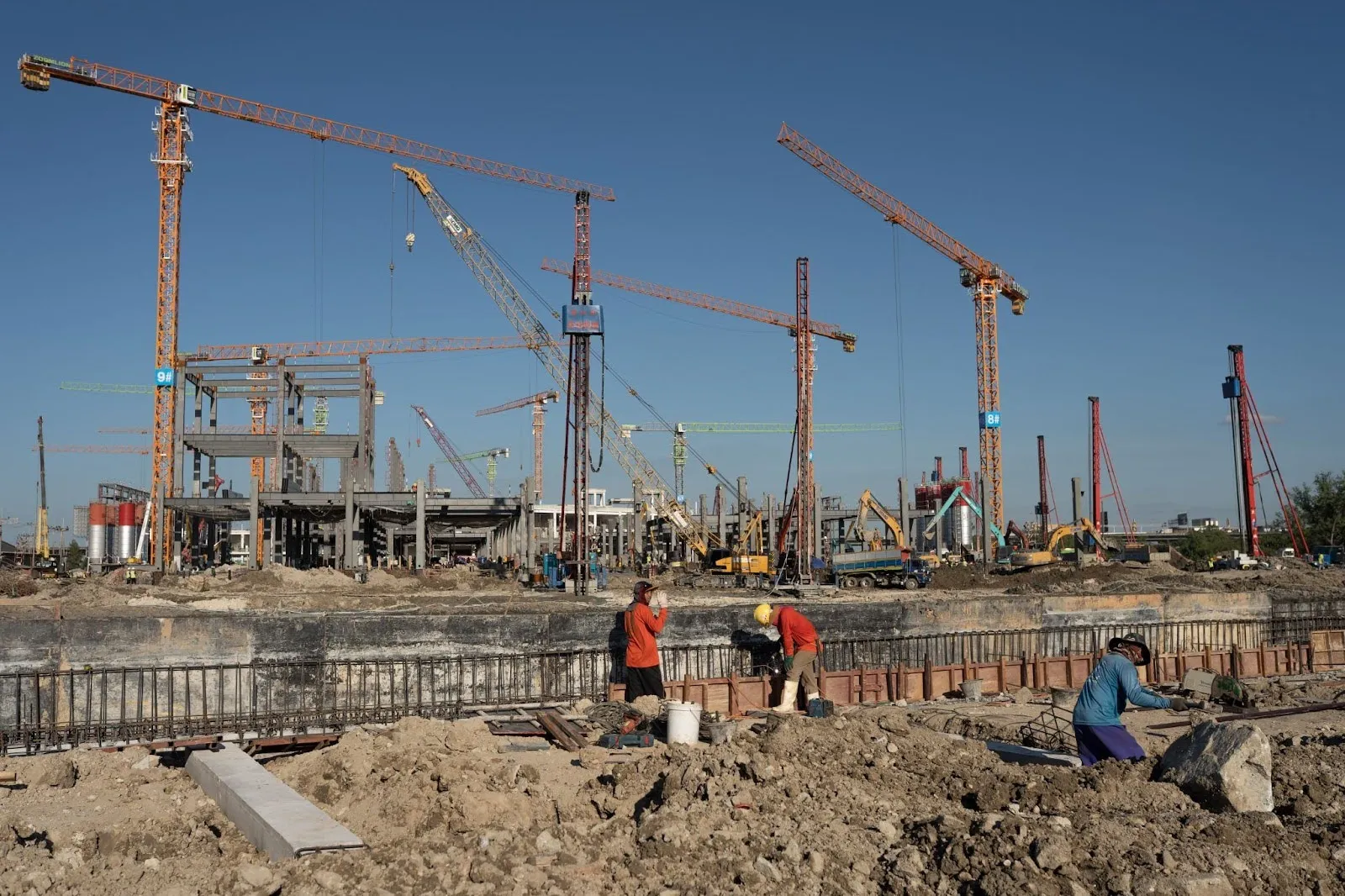
"There's been no survey asking the community about the data center or its water consumption," said Pudit Thamphayun, chief of Khlong Tamru subdistrict. "As far as I know, there's no EIA, and as head of the subdistrict, these things all pass through me — I've not seen it."
The emergence of hyperscale data centers, said Somnuck Jongmeewasin, research director at EEC Watch, an NGO, threatens to strain already-stretched water systems in the EEC further. Demand driven by industrial expansion and longstanding agriculture — particularly water-intensive durian farming — is already projected to put pressure on available supplies.
In 2022, the Thai government's Office of Water Resource Management reported total water demand in the EEC at 658 million cubic meters, including 309 million for industry, 217 million for household use, and 132 million for agriculture.
A study published in February 2024 — before the current data center boom — projected demand would rise to 800 million cubic meters by 2027 and reach 1 billion cubic meters by 2036.
"The industrial areas always win," said Sarayuth Sonlaksa, a former biochemist turned farmer raising crabs and fish in a private aquaculture farm. Agricultural communities and industrial estates already compete for water, and data centers, he added, will lead to more water conflicts. "I'm telling you, it's already broken. It can't get much worse."
One flashpoint is the Khlong Luang Reservoir, where farmers say fish catches have fallen as water levels drop. Much of the reservoir's water is piped to Chonburi's Ban Bueng district, where authorities sell it to industrial estates and households. East Water is building a pipeline to source water from the reservoir, according to the company's website.
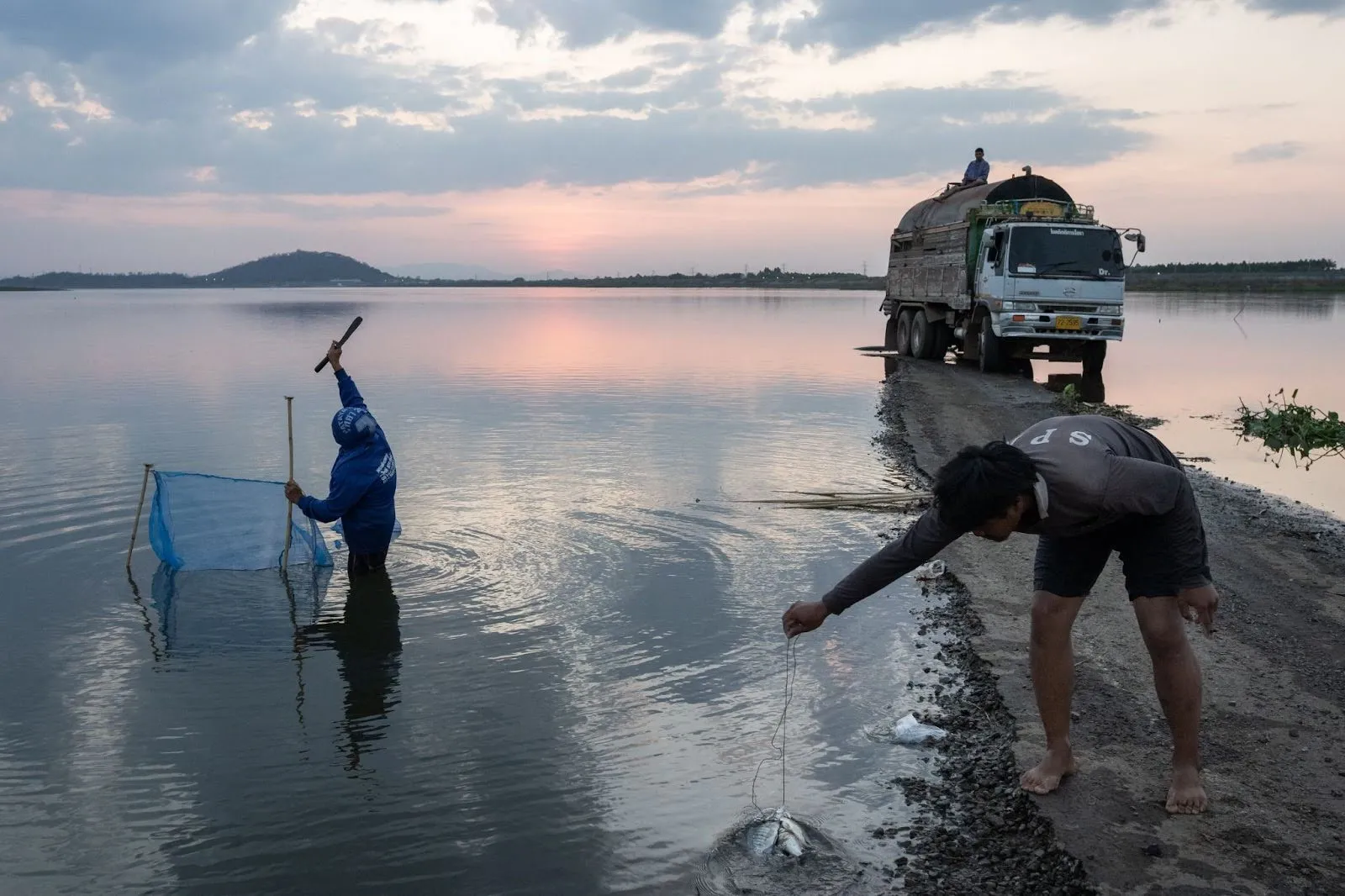
Farmers say that remaining water supplies across the EEC are increasingly earmarked for industry and urban use, and that they have to fend for themselves through longer, drier summers.
Watcharat Pung, a People's Party representative for Rayong's Ban Chang district, said the data center boom has laid bare deep inequalities. "The data centers need a lot of water, yet regular people have no running tap water," he said. "They (data centers) get land titles when most residents here can't get one."
Google is another tech giant that has joined Thailand's data center boom. A Google spokesperson confirmed the company is building a data center in Chonburi, but declined to disclose its exact location, citing security concerns. Google also declined to answer questions about the capacity and projected water consumption of its data centers on confidentiality grounds.
Publicly, Google trumpets its "commitment to water stewardship" and has said it expects its $1 billion investment in Thailand to generate $4 billion for the nation's economy by 2029 and support some 14,000 jobs annually between 2025 and 2029. Once operational, the facility will support about 100 of these jobs, the spokesperson said.
In response to concerns about water stress in Chonburi, Google said it manages resources through a data-driven, climate-conscious cooling framework that accounts for local hydrological factors.
The spokesperson added that Google conducted an EIA for its Chonburi data center, but did not share the findings.
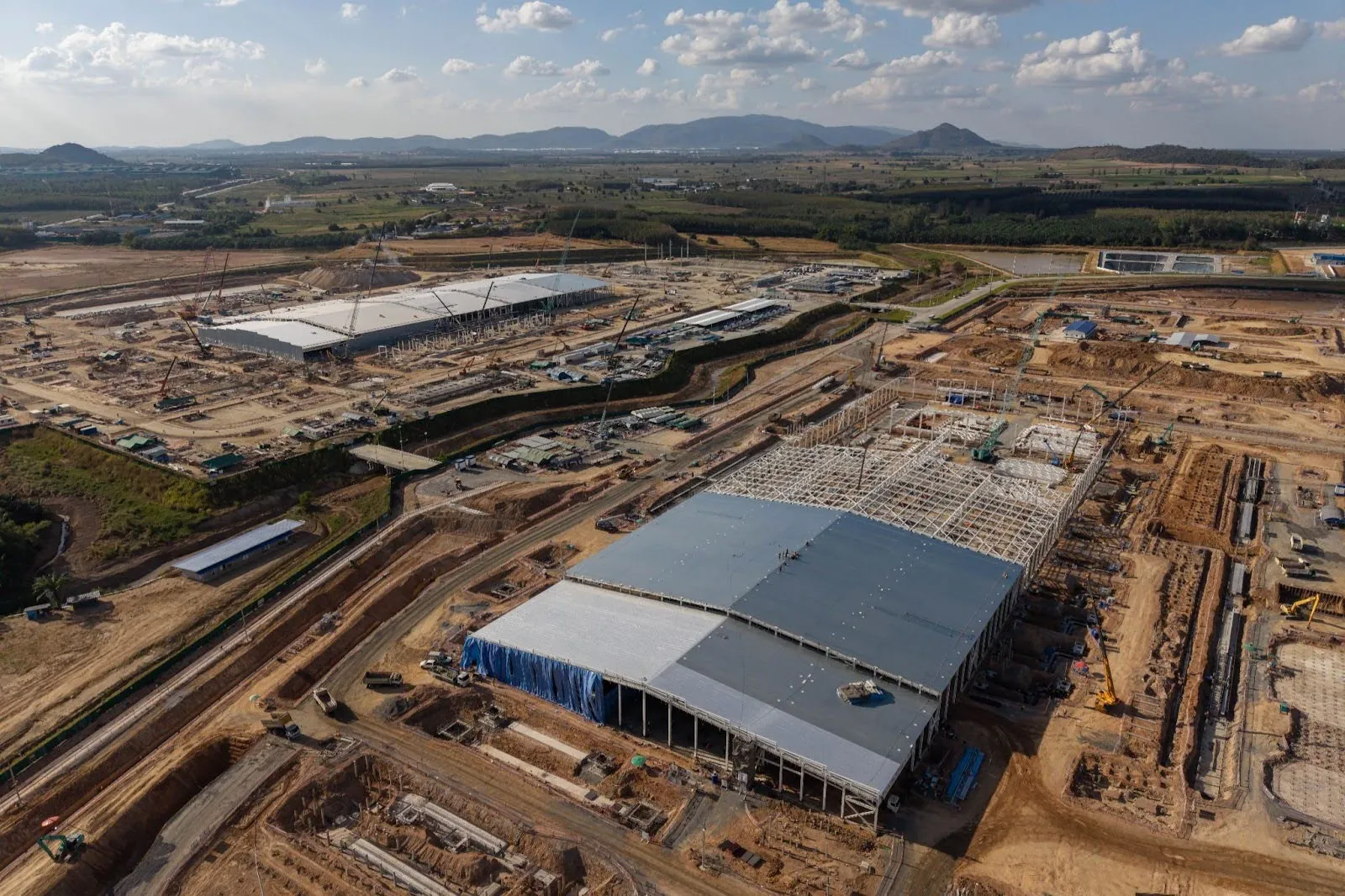
Limited transparency as data centers expand
Wastewater presents another unknown. Communities told reporters they were concerned by the lack of public information on how data centers will treat and dispose of water used for cooling.
Former biochemist Sarayuth notes that the water used in the data centers' cooling systems will likely be treated with chemicals to prevent the buildup of calcium carbonate, calcium sulphate and bacteria on the GPUs.
"Usually, you'd mix chlorine into the water to prevent scaling on the GPUs, and chlorine kills everything," he said.
Experts warn that data center wastewater can contain biocides such as chlorine dioxide and bromine, as well as non-oxidizing agents like isothiazolinone or glutaraldehyde, and corrosion inhibitors such as organic acids and phosphates that prevent rusting or decaying.
Even when discharged at low concentrations, the sheer volume of wastewater generated by some data centers can pose risks once it is released back into waterways relied on by farmers and fishers.
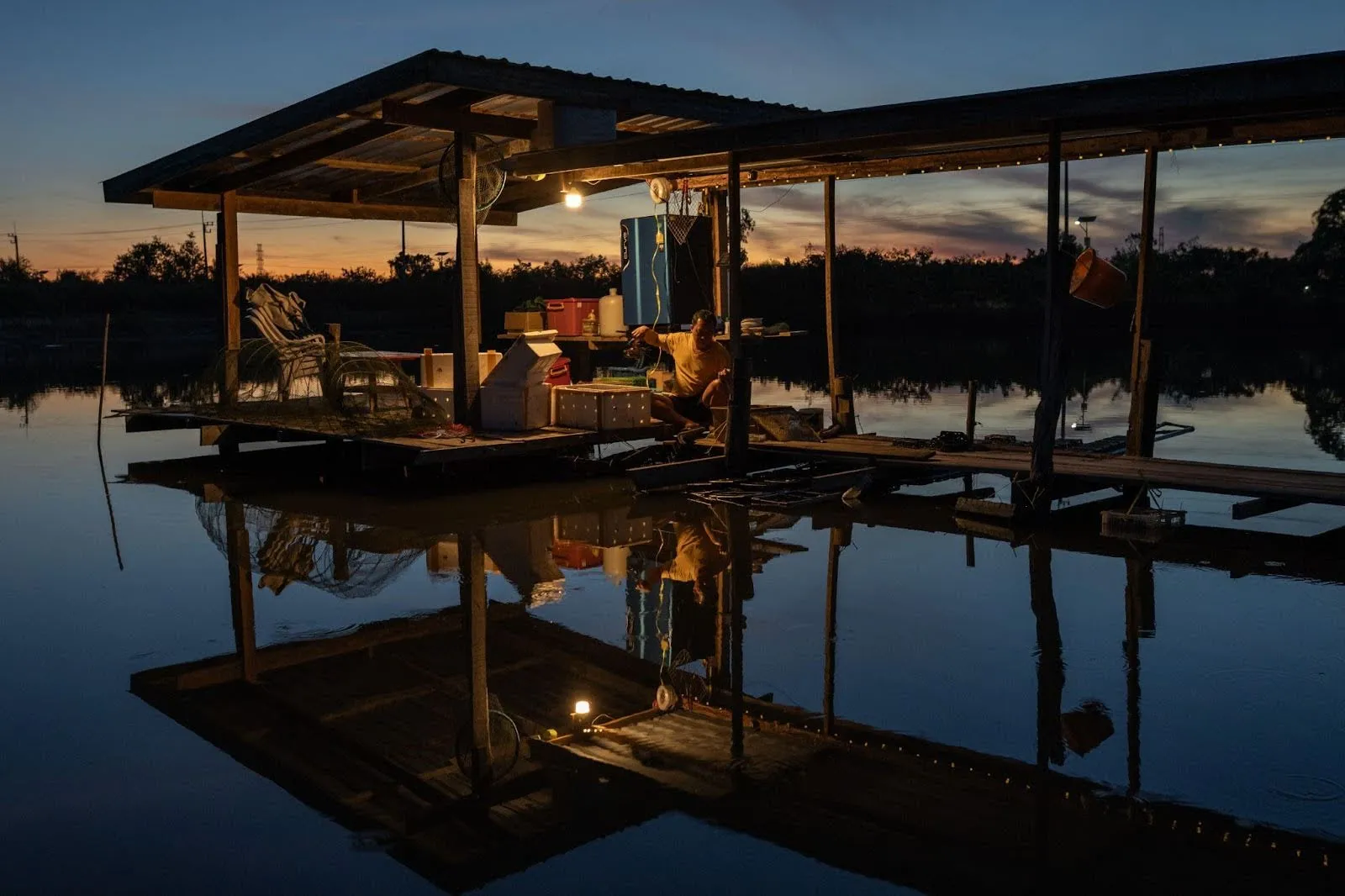
Wastewater handling varies by facility. Many data centers in Thailand are being built inside industrial estates with centralized treatment systems, but standalone facilities — such as Bridge Data centers' QHI01 facility in Chonburi — have prompted fears over uncertainty how wastewater will be managed.
In the EEC, those concerns are amplified by a history of illegal dumping by other industries and waste controls that have at times been poorly enforced.
Farther south, in Rayong — the petrochemical capital of Thailand — the sea's blue sheen has long masked the volume of poorly treated industrial wastewater and raw sewage discharged into coastal waters.
With billions of dollars set to flow into at least eight new data centers in Rayong, including Galaxy Data Center's planned 1-gigawatt facility, Haoyang Data's 300 MW site, ZData Technologies' 203 MW project and two colocation centers totaling 50 MW by K2 Strategic, the province is poised for a new wave of water-intensive development. Rayong is already home to at least three data centers, including two run by Amazon and one by Planet Communications Asia.
None of these companies appear to have published data on water consumption and none of those contacted by reporters responded, making it difficult to gauge the sector's impact on the EEC's already strained water systems.
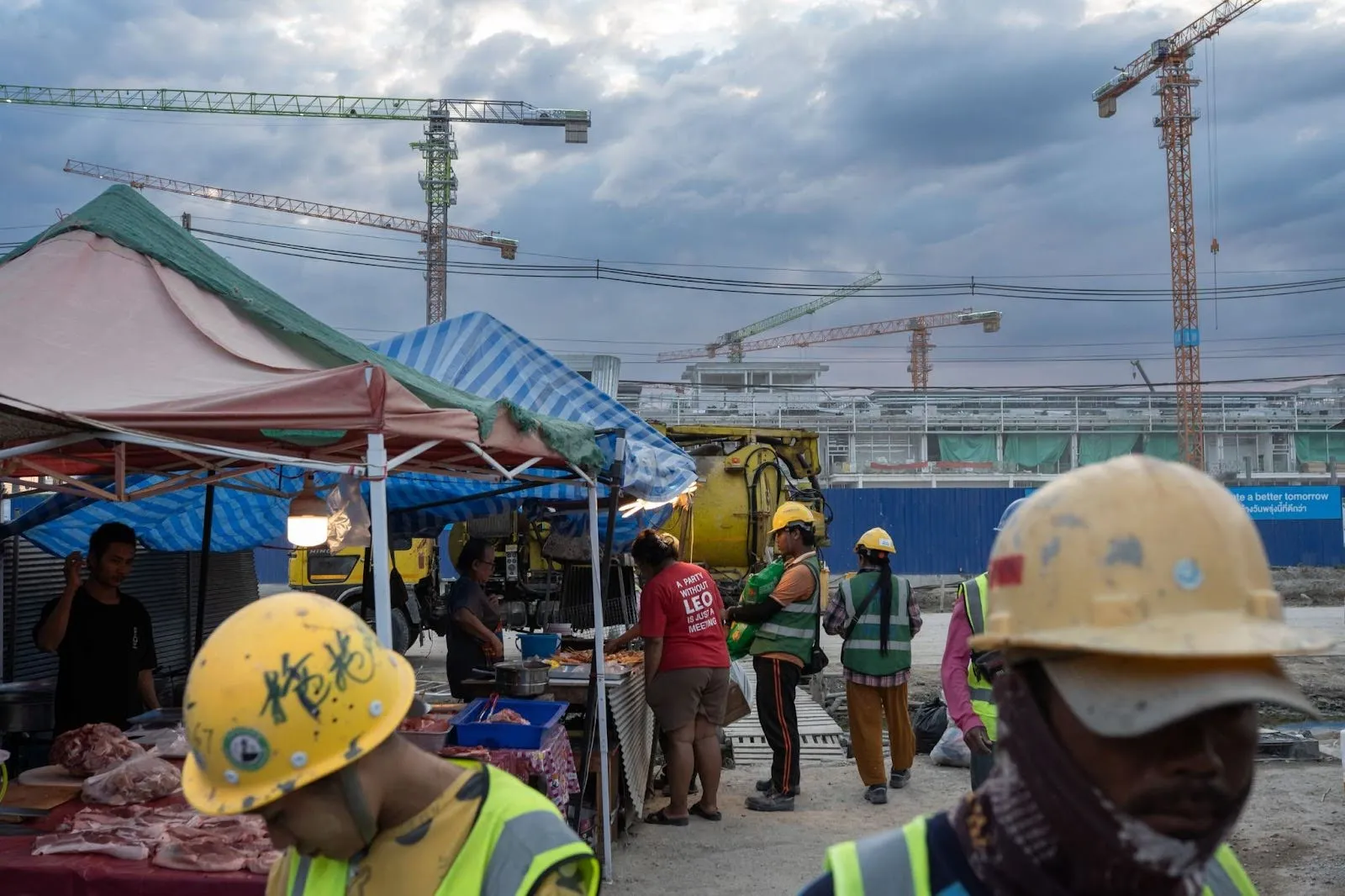
Sakol Thungsub, manager of the Provincial Waterworks Authority in Rayong's Ban Chang district, said the agency is not concerned about water shortages due to rising demand from the spate of new data centers.
Five water production stations, supplied by multiple reservoirs, can produce up to 151,200 cubic meters of treated water per day, he said in a December 2025 interview, while average daily consumption currently stands at about 120,000 cubic meters — leaving a daily buffer of more than 30,000 cubic meters.
The Silicon Tech Park, a large industrial development in Ban Chang district that bills itself as "Southeast Asia's premier Data Center Valley," already hosts Planet Communications Asia's 1.2MW data center and is set to accommodate Galaxy Data Center's planned 1-gigawatt hyperscale facility.
According to Sakol, combined water demand from the two data centers will eventually rise to between 19,600 and 28,600 cubic meters per day. He said that he could request more water quotas from the Royal Irrigation Department, which manages the reservoirs Sakol's agency sources water from, should demand exceed the 151,200 cubic meter capacity.
A spokesperson for Hoyinn Technologies, which owns Galaxy Data Center, meanwhile, assured that their operations fully complied with local regulations.
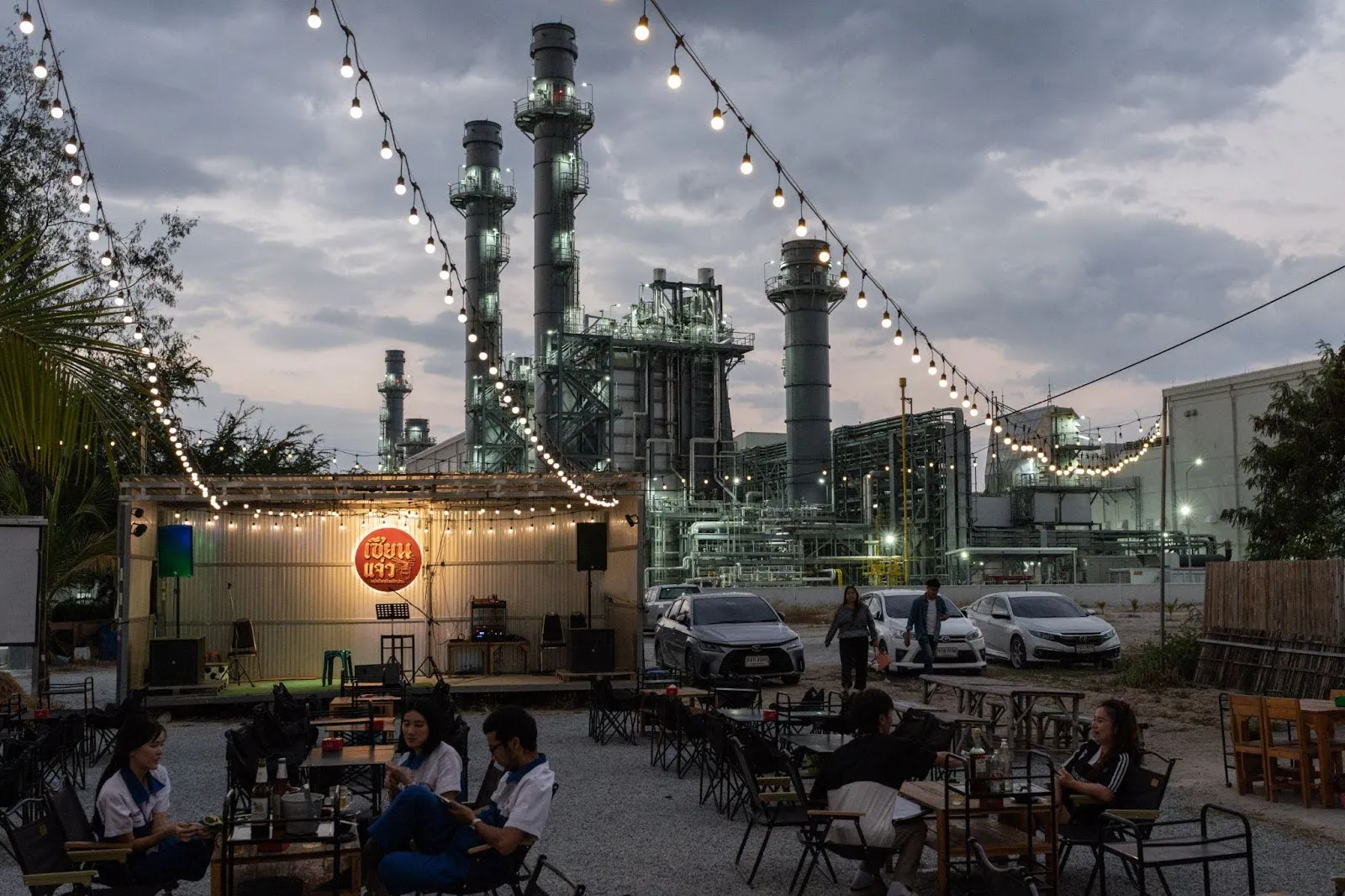
Risks of fossil fuel reliance
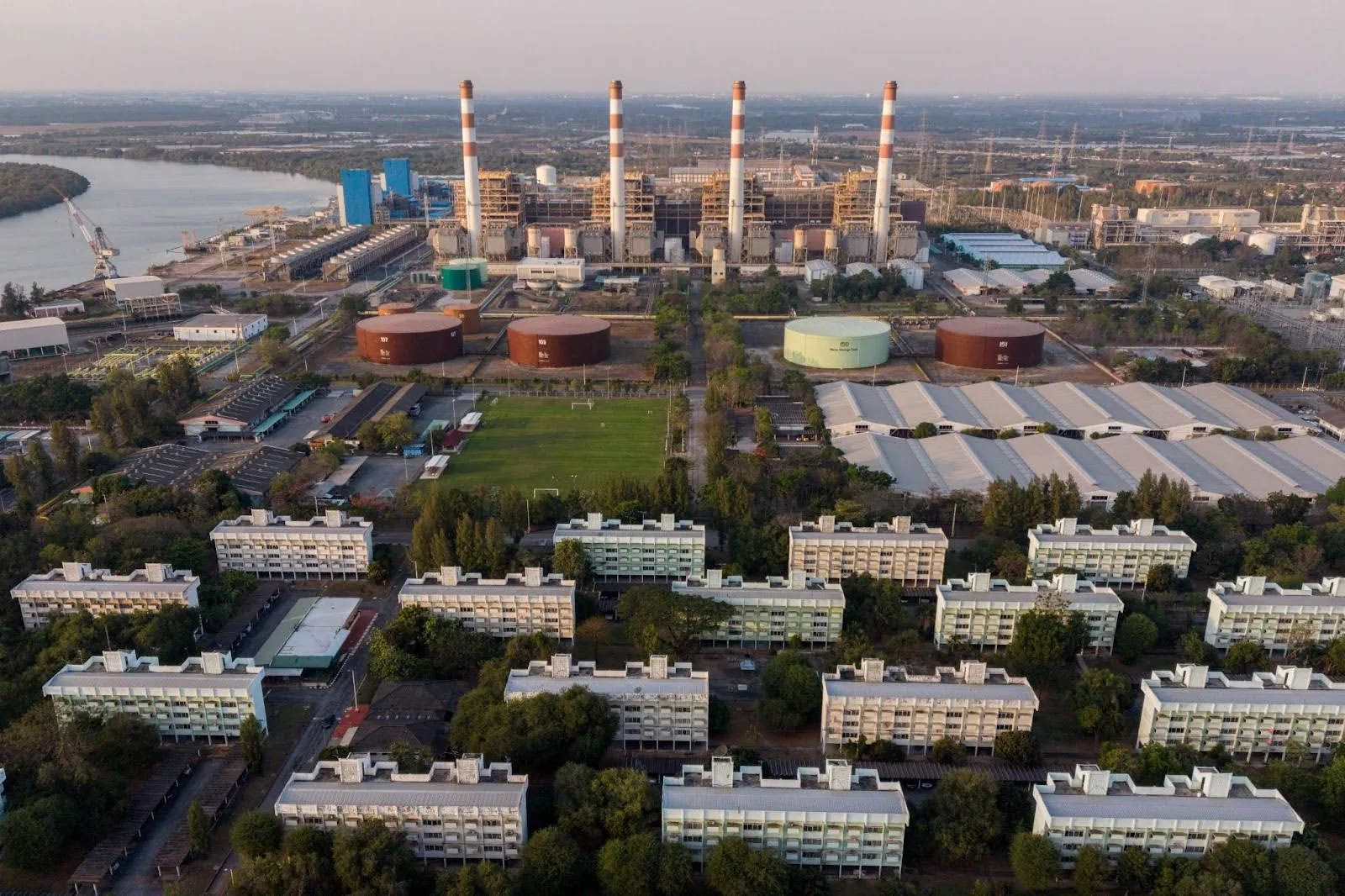
Thailand's data center boom also risks locking the country into deeper fossil fuel dependence as electricity demand surges.
With increased electricity demand, said Sarayut, the biochemist turned crab farmer, the government will try to increase production capacity. "But that will increase CO₂ and PM2.5 emissions from burning fuel."
Despite government targets to reach 68% renewable energy by 2040, Thailand's grid remains overwhelmingly fossil-fueled. Renewables accounted for just 15% of the energy mix in 2024, while fossil fuels such as natural gas accounted for 68.3% and coal 16.7%.
Peter Ford, a regional energy and climate consultant, said it was reasonable to expect that many of the new data centers would be powered by gas.
"If we assume that the data centers will increase national electricity demand at a far quicker rate than the last power development plan projected, then given Thailand's existing fossil gas infrastructure and lack of support for solar and wind, we can assume much of the energy growth will also come from gas," Ford wrote in a message.
Global brands, he said, will likely use international renewable energy certificates or virtual power purchase agreements, essentially purchasing renewables elsewhere to offset dirty energy used in jurisdictions with low renewable production.
A Google spokesperson said the company would seek to purchase energy from yet-to-be-constructed power projects to advance grid decarbonization and bring new clean energy onto the grid, aiming to partner with power producers and purchase carbon removal credits to address residual emissions.
"The EEC policy started in the wrong direction," said Somnuck Jongmeewasin of EEC Watch. "There was no strategic environmental assessment, so we don't even know (whether the resources are available)."
While environmental impact assessments are carried out for individual proposed projects, a strategic impact assessment would take into account the broader impacts of large-scale development programs such as the EEC. While not necessarily a legal requirement, it would make details public about the sustainability of continued growth.
The Eastern Economic Corridor Office did not respond to reporters' questions.
Somnuck warned that without proper planning, the country's data center expansion could push the EEC past a tipping point. "We need a strategic environmental assessment — and we need it now."
"Honestly, we needed it yesterday."
Update
As billions of dollars continue to flow into Thailand's data center sector, calls are growing for stronger oversight of the country's development strategy. In July 2026, an opposition MP from Chonburi called for the establishment of a parliamentary committee to review data center regulation, arguing that the industry's growing demands on water and energy resources must be managed in an environmentally sustainable way.
Read the latest update on Thailand's data center boom in Mongabay, here.