
In Thakurpada, a slum outside Mumbai, drinking water comes every other day.
Ruksana Mohammed, a woman in her 50s who runs a grocery store, is used to interrupting her day to collect water. "When it comes, we need to drop whatever we are doing," she said.
On Sundays, Umesh Ganu, an office attendant, lines up at his local water pipe. He fills up several plastic jerrycans and buckets. The water is not potable and not safe for drinking. To drink, he relies on store-bought cans of filtered water.
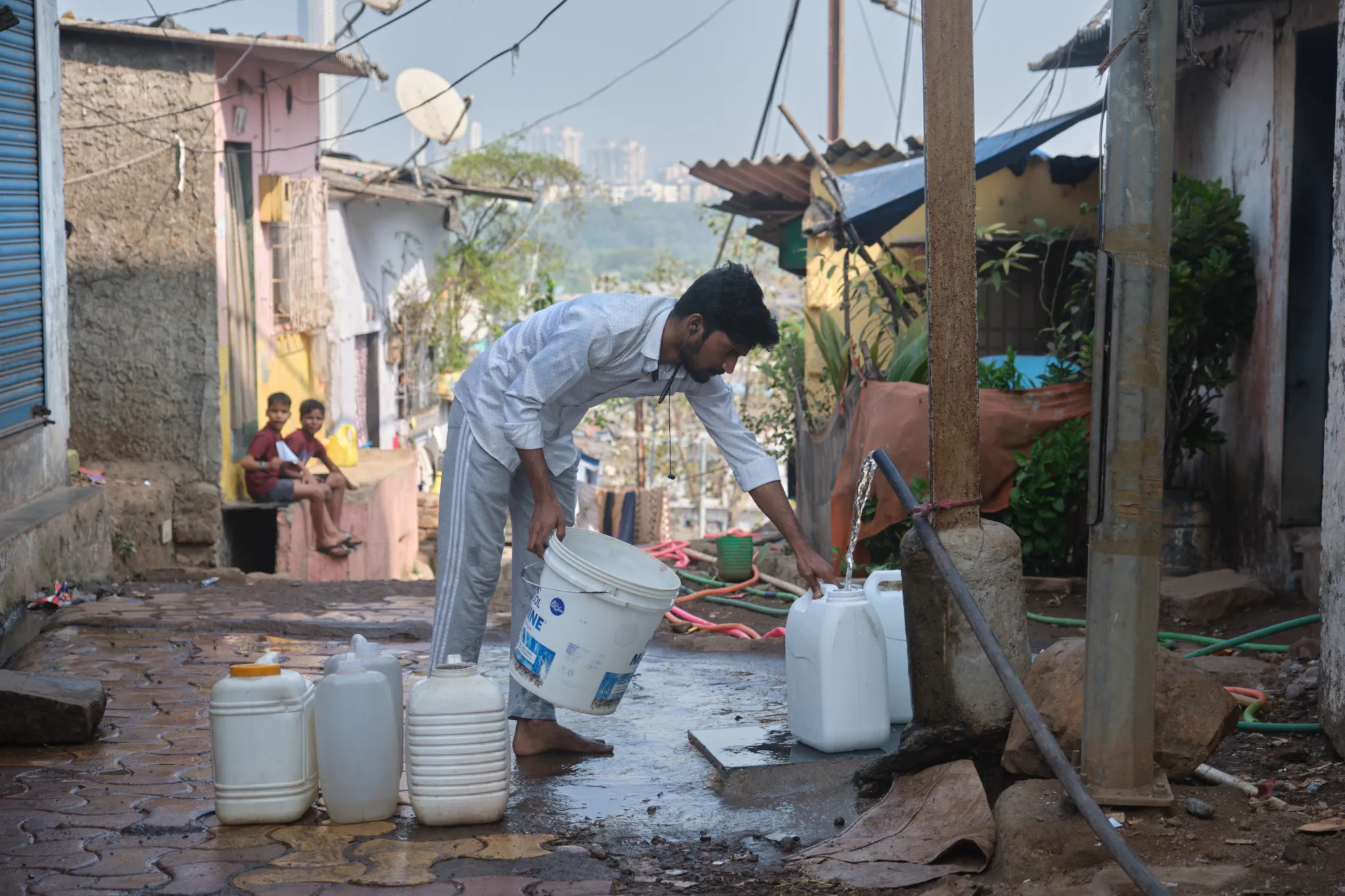
Residents of Thakurpada, many of whom are factory workers or daily wage earners living in makeshift homes covered with tarp or corrugated metal roofs, have contended with water shortages for decades. Yet, data centers emerging in their neighborhood have access to water 24/7.
A new seven-storey steel and concrete data center by Digital Edge, a Singapore-based company, is just the beginning. The company has plans to build six more data centers on this site. It purchased a 47-acre plot from Mukand Ltd, a local steel manufacturer. The $553 million expansion will consume 206,000 litres of water every day, according to company's filings.
At least eight other data centers are planned within a 3-mile radius. Next door, a Japanese company, NTT Global Data Centers, is building another massive facility on 55 acres purchased from the same steel company. This facility will consume 223,000 liters of water daily.
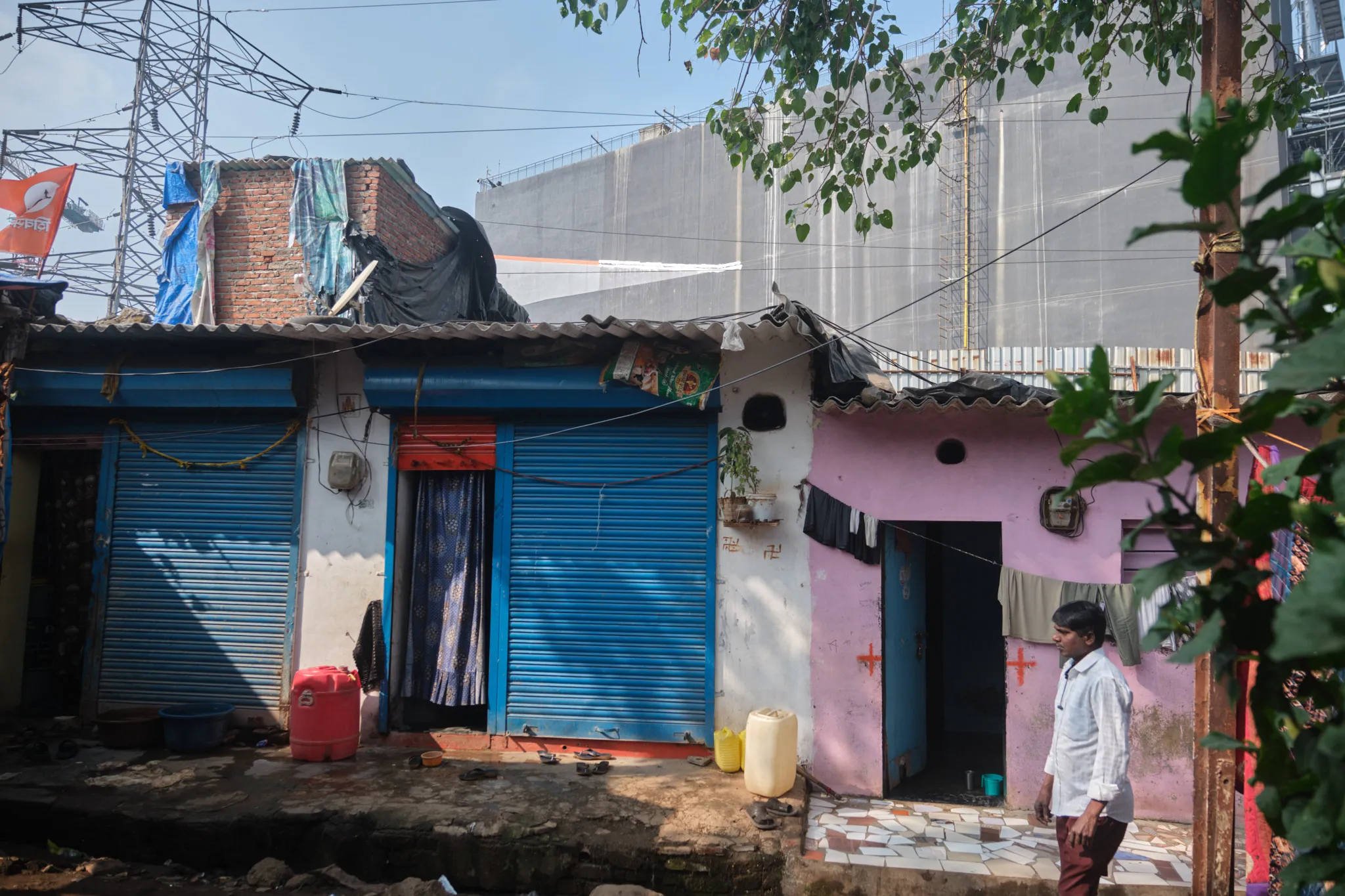
Hyperscale data centers like those emerging in Thakurpada are notorious water-guzzlers. Intensive AI computing, especially, utilizes high-powered chips to run complex tasks, generating enormous heat that requires large amounts of water for cooling.
This adds to the strain on the world's freshwater supply, which is already being drained by other industries, human consumption, and the warming effects of climate change, with scientists warning of a "global water bankruptcy."
Billions of people around the world will be affected by dwindling freshwater, according to a recent United Nations report. While the more "powerful actors" profit from water-intensive industries such as AI, the most acute effects will be felt by low-income groups, indigenous people, women, youth, and other vulnerable communities that bear a disproportionate burden of the crisis.
In Mumbai, data centers are guaranteed water 24/7 but only 4% of the metropolitan region receives around-the-clock supply. More than 71% receive water for less than four hours a day, according to a May 2025 report by Praja Foundation, a non-governmental organization.
Here, the poorest households bear the brunt. Slum areas receive just 45 litres of water per person every day compared to 135 litres in wealthier neighborhoods.
Across India, data centers consumed 150 billion liters of water last year — a figure that's poised to double by 2030, according to industry estimates. India has 18% of the world's population but just 4% of its freshwater reserves. Across the country, 600 million people already face high to extreme levels of water scarcity, according to government data.
To meet the growing water demand in the Mumbai metropolitan region — home to more than half of India's data centers — the state government has approved several new dam projects. To build the Kalu Dam, which has been fast-tracked, the government is proposing to acquire 999 hectares of forest and more than 1,200 hectares of private land.
The project faces stiff resistance from local communities, including indigenous Adivasis who would be displaced. All the affected tribal village councils have rejected the proposal.
Growing pains
In Spain, in the landlocked region of Aragón, located between two major economic powerhouses, Madrid and Catalonia, there is mounting backlash over the high water demand as the region becomes one of the new promised lands for the data center industry, looking to meet the burgeoning AI and high-density computing demand in Europe.
In 2022, Amazon Web Services (AWS), Amazon's cloud and computing division and the global leading hyperscaler, began operating three data centers there in Huesca, El Burgo de Ebro and Villanueva de Gállego — creating a hub aimed at becoming the biggest hyperscale project in Europe by 2030.
Microsoft, meanwhile, has already obtained the permits for three new centers. And other big corporate actors— from transnational investment funds like Blackstone and Azora, to relevant energy firms Repsol and Forestalia — have also announced massive data center projects in the region.
But along with the local government's growing aspirations is growing opposition over the sheer volume of water use necessitated by this surge in hyperscaler data-processing infrastructure. Like many other parts of Spain, Aragón is a water-stressed region that has experienced severe drought in recent years.
AWS has said that each of its centers uses up to 53.9 million litres of water annually.
Concerns grew last year after Amazon sought to update the environmental permits for its three operating centers, following its admission that it used 48% more water to cool its servers than initially claimed.
In the technical report to justify these changes, Amazon stated: "The summer of 2022 was the hottest on record in Europe and Spain, and an extraordinary test of the unpredictable threat of climate change to AWS water infrastructure."
While the regional government updated the company's permits without question, some locals are less accepting of the tech giant's "unpredictable" climate change explanation.
"It's ridiculous that they say they hadn't properly calculated the effects of global warming. You've been selling for years that you have an AI system so that farmers can save water [in their irrigation systems], and you're not capable of calculating that?" said Alonso Llorente, a resident of Zaragoza, the region's capital, and a member of one of several groups that have been mobilizing for months to stop Amazon's plans.
Brazil's crown AI jewel
In the very south of Brazil, in a city called Eldorado do Sul, the small farmer João Francisco Morais Cardozo walks through his 17-hectare farm and explains the system he developed to collect and store rainwater for use in his orchard.
The lack of water in the summer was what led him to stop planting rice on the property some years ago, but now even the less water-intensive crops are suffering during the dry season.
Cardozo, alias Tigre, lives and plants inside an agrarian reform settlement, a collective land whose right of use belongs to the Movimento dos Trabalhadores Rurais Sem Terra or Landless Workers' Movement (MST). The MST is a social movement in Brazil advocating land reform and is currently the largest producer of pesticide-free organic rice in Latin America.
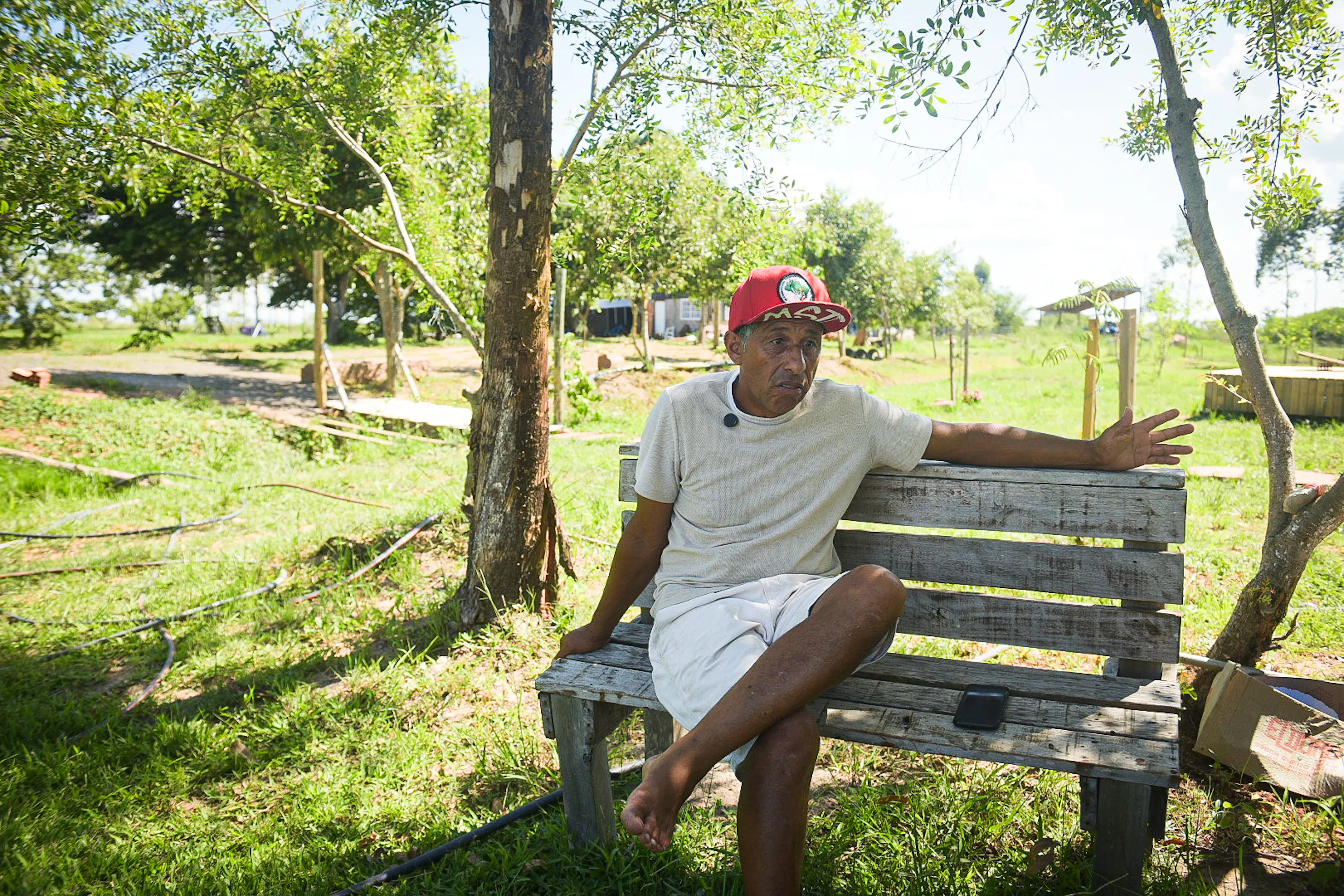
He said many of his fellows are developing systems to ensure the water needed for the rice to grow in the summer.
"When we got this land, we struggled to install fences. The land was so wet that we used termite mounds to keep the stakes firm," he recalls, even up to the 90s, when MST got the right to stay on the margins of the Jacuí River, one of the most important in the region.
"But now, we are not able to dig up the soil, because it is so dry in the summer that it becomes compacted."
This is why he is concerned about the future construction of a data center in the surrounding area. And it isn't just any data center, but one local authorities boast to be the biggest project in South America — the 4.75 gigawatts (GW), 5 million-m² Scala AI City campus, by U.S.-owned hyperscale data center platform Scala.
Cardozo states the farm had already run out of water several times due to climate change.
"The climate is changing a lot. Today, droughts are much more intense than they used to be, and temperatures are much higher, which contributes to water evaporation."
It is surprising that the concern of organic rice producers in Eldorado do Sul is the lack of water, as recently as mid-2024, part of the settlement had been requesting relocation due to a seemingly opposite problem — recurrent flooding.
That year, in May, unprecedented flooding devastated the municipality. The New York Times reported it as being "one of Brazil's worst floods in modern history, leaving hundreds dead and nearly an entire state submerged". In Eldorado do Sul, around 81% of the houses were affected.
Questions without answers
Not far from the MST settlement, the residents in the rural village of Guaíba City, are also concerned. "Here we have a water shortage, as there is no sanitation network, and we only get our water from artesian wells", explains Raquel dos Reis Roman, 45, who moved to the area in 2017 in search of a better quality of life.
"Data centers consume a lot of water, and we depend on the aquifer. Could their consumption harm ours? That is the question that remains without answers, "added Sirlei Souza, one of the community leaders, who has lived in the area for more than 30 years.
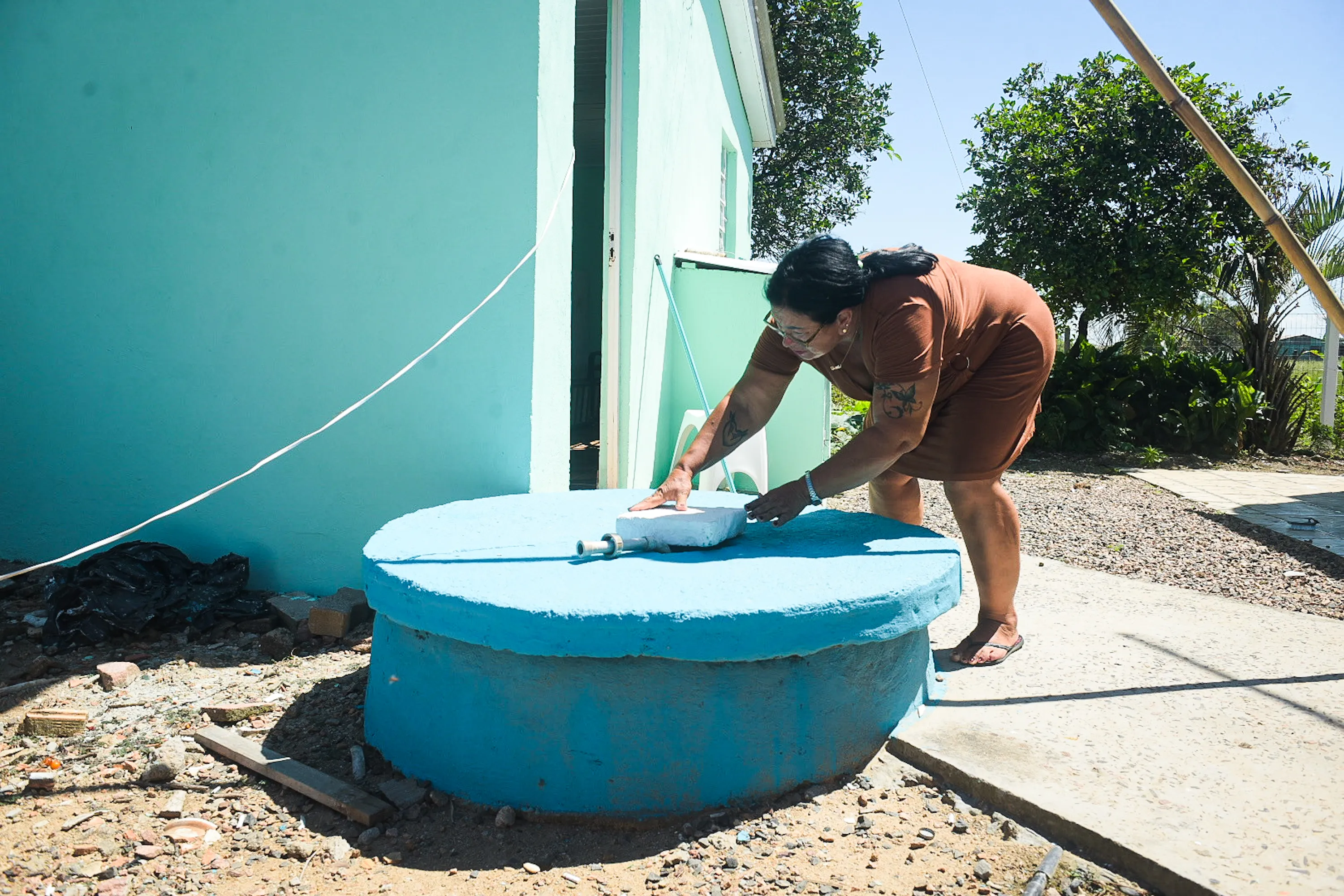
A platform built by the Brazilian government to prevent impacts of climate change in the country classifies Eldorado do Sul as "high risk", one of the 20 most vulnerable places in Rio Grande do Sul state regarding water stress. The platform highlights the intensive use of water by industry and agriculture as the main factors for the risk level.
According to a study by the Brazilian National Communications Agency (Anatel), data centers using traditional water-cooling systems can consume up to 18 million liters of water per day.
Yet Scala's AI City, has said this will not be the case for its infrastructure.
In its sustainability report, Scala said that its facilities employ "air-cooled chiller systems combined with free cooling", with no water wasted. "The coolant circulates within a closed-loop system, requiring no replenishment beyond the initial filling. As a result, these data centers consume no additional water during operation and generate no discharge".
But not all are convinced.
Lack of complete data
Brazilian research and advocacy group the Laboratory of Public Policy and Internet (Lapin) has urged caution.
"Although Scala deems this to be a self-sustaining cycle, it does not report the total volume of water required for this initial charge, nor does it provide specific data on its facilities, such as the Eldorado do Sul data center, which consequently hinders assessments of the actual water impact of its operations," the organization said in a report.
A study cited by the Brazilian technology industry association Brasscom estimates that closed-loop cooling systems require an initial supply of 23,000 litres per megawatt (L/MW). At full capacity, Eldorado do Sul's AI City would therefore require roughly 110 million litres — equivalent to the water needs of a 10-hectare rice plantation operated by a medium-sized producer.
A separate report by three Brazilian organisations on the data center boom, noted that while it is increasingly argued that newer data centre architectures significantly reduce — and in some cases nearly eliminate — water use for cooling, academic studies and media reports caution that where evaporative cooling is used, or where there is strong indirect water dependency through electricity generation, consumption can still be significant. It adds that site selection, system design and data transparency are key factors in assessing impact.
According to Brasscom, annual weather replacement is also required due to maintenance and leaks — estimated at about 10% of reservoir capacity. The association projects that data centers accounted for 0.003% of Brazil's total water consumption in 2022, rising to 0.008% by 2029.
To Lapin, it is clear Scala lacks consistent data on resource consumption, which, in turn, constrains stakeholders' ability to conduct critical assessments.
"As a result, the company moves away from establishing itself as a sustainability benchmark and heads toward a development approach characterized by limited disclosure and negligence toward the communities involved" it said.
Responding to our queries, Scala and the Rio Grande do Sul government have assured that there is no risk to the water supply in the region, with the latter insisting that the planning for the Scala AI City project is being conducted in compliance with legal regulations, and while protecting the interests of the local population, including its water supply.
"The project does not compete with domestic, agricultural, or industrial uses, even in scenarios of water stress," they said.
Not as cool as you think
In southeastern France, along the Mediterranean coast, a different water concern is brewing.
In Marseille, France's second-largest city, U.S.-owned Digital Realty has been using a river-water cooling system — which it describes as energy saving — to cool several of its data centers along the port.
Since 2018, it has been granted authorization to draw water from the Galerie à la Mer (sea tunnel), a former drainage gallery built to carry away excess water from the old coal mines in the nearby town of Gardane, to cool its data centers.
Divided into two sections, the old tunnel consists of one part that carries away polluted water and a second that carries potable water. Captured at 15.5ºC, the water passes through the data center's cooling systems before being discharged into the Mediterranean Sea at 27-30ºC. Local activists are denouncing the risks to the local biosphere and calling for in-depth research on the subject.
As revealed by La Quadrature du Net, the main French association for the defense of public freedoms, the French government invested €15 million to partially fund the work to divert water from the Galerie à la Mer to Digital Realty's project.
But to the collective Le nuage était sous nos Pieds, or Clouds Beneath Our Feet, a group of Marseille-based activists investigating the impact of data centers, "this is a real greenwashing policy."
Investigations by the collective over the years have found that Digital Realty has been overstating the system's impact on its energy consumption.
In a 2018 public inquiry, the company explained that river cooling reduced the electricity consumption of its data centers by 90%. In September 2024, the company's French manager publicly cited a figure of just 30%.
As revealed by an impact study on MRS5, one of the data center projects under construction in Marseille, river cooling has a very limited impact on reducing energy consumption in the company's most recent projects.
The project's energy consumption, estimated at 241 million kilowatt-hours annually, would fall to 230 million kilowatt-hours with the use of river-cooling. That's a reduction of less than 5%.
This is all on top of the concern that power utilised by data centers is being siphoned away from other infrastructure that could better serve local needs.
Sébastien Barles, deputy mayor of Marseille overseeing energy transition, said data centers are contributing to an overload of the electrical grid and creating potential conflicts of use with new needs such as bus fleet electrification, electric mobility and the electrification of the ship repair yard.
In France, local authorities decide on a local urban development plan that specifies which types of infrastructure, industry, or businesses can be established within the municipal territory. There is no specific category for data centers, and elected officials cannot directly oppose projects.
For Barles, an elected official, there's a feeling of "powerlessness" within the community. "We have no means to refuse the installation of data centers."
Digital Realty did not respond to requests for comments.