
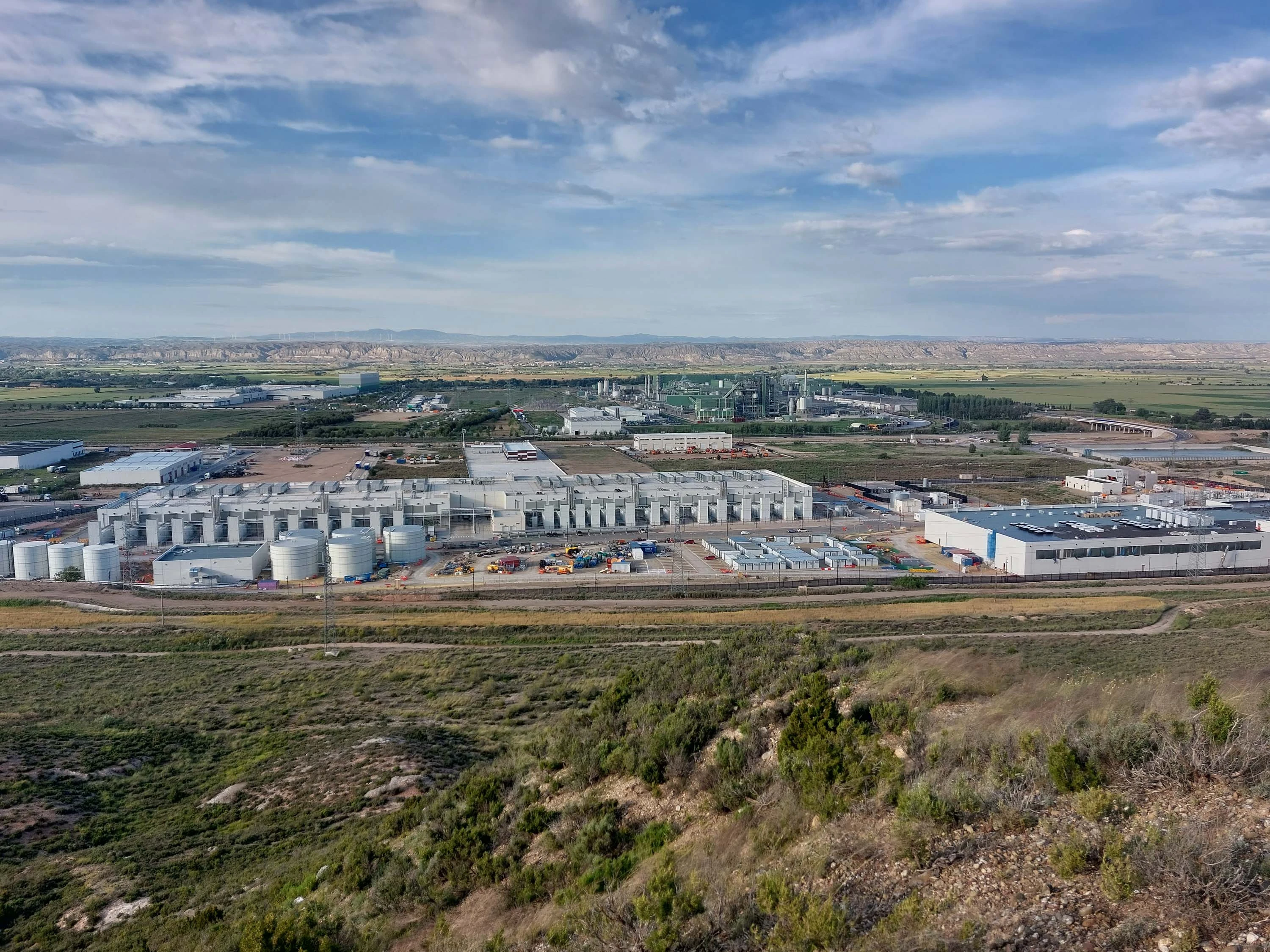
Amazon Web Services (AWS), Amazon's cloud computing arm, has been quietly transforming Spain's northeastern region of Aragón into one of its largest computing hubs outside the United States.
Now, residents and environmental groups are pushing back, accusing the regional government of complicity. In January, a coalition of civil society organisations filed what they describe as Spain's first lawsuit against data centers, challenging the Aragón government for enabling the "uncontrolled expansion" of projects.
The resistance in Aragón forms part of a small but growing movement across Europe challenging the rapid expansion of data centers.
Aragón in northeast Spain has attracted multibillion-dollar investments from hyperscalers and cloud operators, including Amazon, Microsoft, and Blackstone.
It's among Europe's fastest-growing data center hubs and has been compared to the U.S. state of Virginia, home to the world's largest concentration of data centers.
AWS announced its first data center project in Aragón in 2019, shortly before the COVID-19 pandemic. Three data centers opened their doors in 2022. The explosion of generative AI following ChatGPT's rise has led executives to double down on this region, with its low population density, cheap energy, and strategic location — transforming a rural part of Spain into a global data center hub.
In 2024, AWS announced a massive Euro 15.7 billion expansion plan over 10 years.
The data center hub — the largest of its kind in Spain and southern Europe — will require more than 10,000 gigawatt hours (GWh) of electricity once operational, according to documents submitted by Amazon. That would exceed the region's current total demand across households, infrastructure and industry. The company has pledged to power its data centers with renewable energy.
The facilities are also expected to consume around 750,000 cubic metres of water annually for cooling and occupy hundreds of hectares of land.
On 2 March, the company announced that it would increase its investment by another Euro 18 billion with three more data centers and a plant to assemble and refurbish servers. The company has not disclosed how much energy and water these new facilities will require.
Uncontrolled expansion
The plaintiffs say the government has failed to adequately assess the environmental, social, labour, and economic impacts or to ensure the project complies with local regulations.
They allege the project was approved within weeks under the "general interest" designation — a classification that can accelerate permitting and unlock tax incentives — without meaningful public participation.
"It is insulting to say that this project is in the 'general interest' of the region," said Luis García Valverde of the organization Ecologistas en Acción, which is part of the legal challenge.
Projects granted "general interest" status must meet specific criteria, including addressing employment disparities. While AWS's economic impact report estimates approximately 6,800 jobs, it does not detail job types, duration or location — raising concerns, echoed by independent research, that the projections may be overstated.
The report also estimates a Euro 12.9 billion contribution to Aragón's GDP, though critics say the methodology is outlined only briefly and in broad terms. "I thought it was just a summary when I read it," Valverde said.
He and his colleagues allege the approval process was expedited by significantly reducing the time frame for social organizations and other actors to submit comments and allegations.
"By prioritising speed over critical evaluation, these instruments can have catastrophic consequences, from ecosystem degradation to violations of community rights," they said.
 collective, a local environmental group that is part of the coalition challenging rapid data center expansion in the region, in Zaragoza, last September. Photo by No Es Sequía Es Saqueo.](/photos/Spain_02.webp)
The lawsuit follows unsuccessful attempts in recent months to challenge Amazon's and other hyperscale developments, including Microsoft's, through administrative channels.
Valverde said the strategic litigation aims not only to highlight the ecological, social and economic impacts of such large-scale infrastructure, but also to reaffirm "the need for public debate on the expansion of these technological projects in the region."
"We would also like to set a legal precedent that could support similar cases," he added. "If we win, it could have a deterrent effect [on other data center projects in Spain] and help raise public awareness of their impacts."
The case is being funded through crowdfunding. Within six days, organizers raised enough to initiate proceedings, seeking both to contest the project and establish a precedent for future large-scale data center developments in Aragón and elsewhere in Spain.
Something "fishy"
In France, the country's ambition to become Europe's top destination for data centers has unsettled some residents, who cite perceived environmental risks and what they see as selective state engagement.
Opposition has surfaced in Wissous, a commune in the southern suburbs of Paris.
There, a massive infrastructure by major U.S.-owned data center operator CyrusOne has become the focus of a political and legal battle.
Wind of the project surfaced only weeks before the 2020 municipal elections. Politician Philippe de Fruyt of the Wissous notre ville opposition group, and municipal councilor Jean-Luc Touly have opposed it since, due to potential environmental impact and consequences of its vast energy consumption.
"Before going into politics, I had a career in industry," Fruyt, who is running for mayor and who spent most of his career at an automotive equipment manufacturer, explained.
He said, "I learned there that when you have a good project, you let people know about it.
"When no one knows anything, it smells fishy."
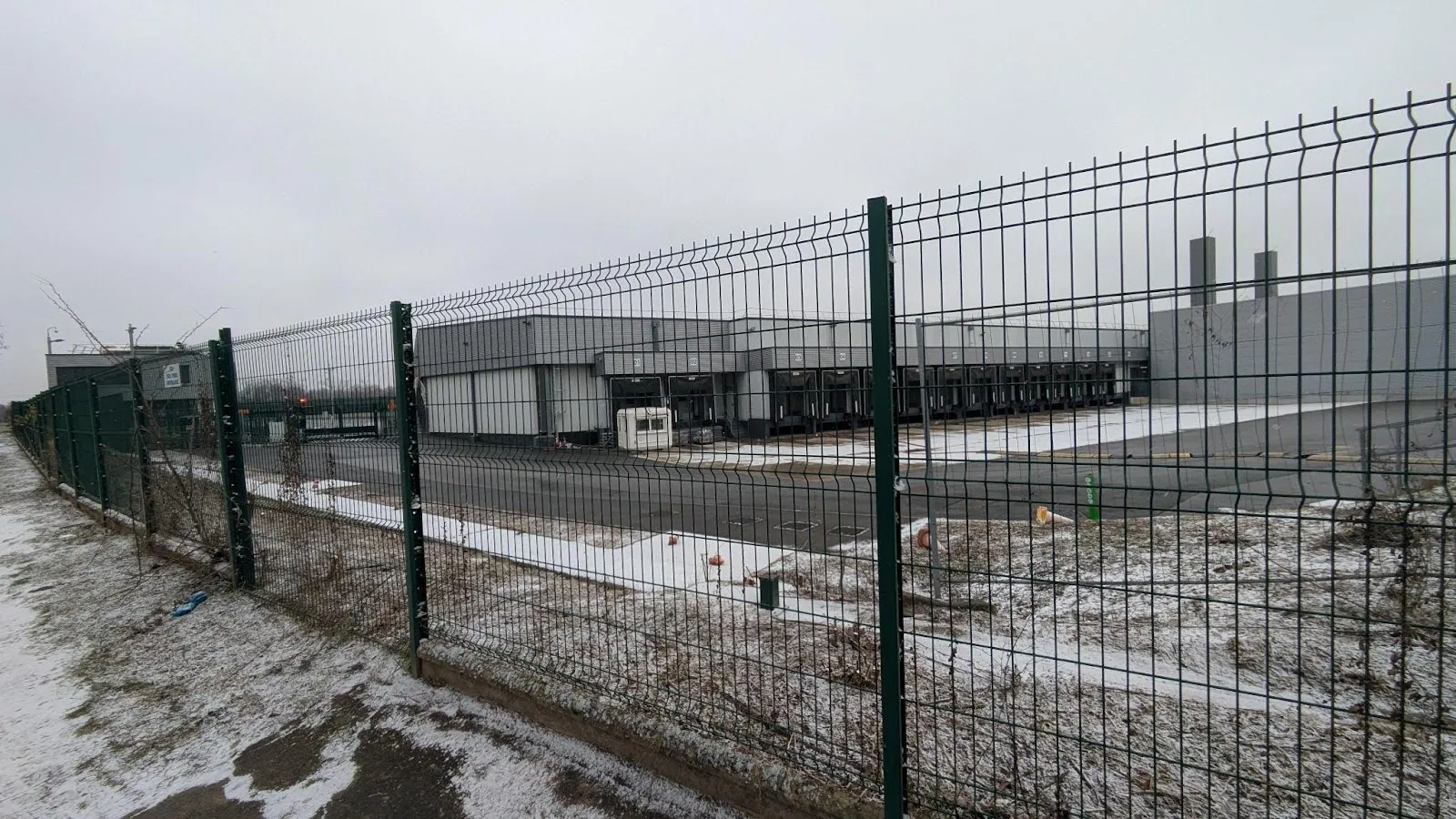
Alongside data integrity association Data for Good, they are now challenging the project in court. According to the plaintiffs, CyrusOne had divided the development into three phases, each designed to remain below the regulatory thresholds set by France's Environmental Code. Lou Welgryn, co-president of Data for Good, said the case reflects a broader practice in how data centers are established in France.
Under French law, projects below 20 megawatt (MW) are required only to submit a declaration before launch.
Those between 20 and 50 MW must be registered and undergo an environmental assessment, with details and public feedback made available at the town hall.
Projects exceeding 50 MW are subject to stricter authorisation procedures, including more comprehensive audits and public consultations.
In the case of CyrusOne, it initially secured a permit in 2020 for a 4.5 MW installation in Wissous. In 2021, it announced plans to expand to 49.5 MW. Then, 83 MW with news Amazon's AWS would occupy some 15,000 sqm (161,458 sq ft) of technical space.
According to the plaintiffs, by phasing the project in stages, CyrusOne was able to avoid a more stringent regulatory framework, limiting the full assessment of its environmental impact and making it harder to properly inform the public.
The company has declined interview requests and not responded to questions.
Difficult to backtrack
In a 2021 letter to the town hall, CyrusOne's advisers said Euro 52 million had already been invested in phase one and that the project's profitability depended on completing all phases.
When the mayor later refused a building permit for phase two, the company appealed to the administrative court, which ruled in its favour in 2023, clearing the way for the expansion of its Wissous campus.

In France, municipalities set local urban development plans that determine what types of infrastructure and businesses can operate within their territory. However, there is no specific zoning category for data centers, and elected officials cannot directly block such projects.
Wissous and the group Data for Good have appealed the court ruling, arguing that the project's full scope should have been declared from the outset.
A senior environmental authority official informed the ERC that CyrusOne's approach in Wissous mirrors other developments: once construction is significantly advanced, it becomes difficult to reverse or relocate a project.
Critics also question the site's proximity to homes, a stadium and a youth center, citing noise and pollution risks and limited plans to recover waste heat — low-level thermal energy expelled by its servers.
They point to a pilot project by French operator Data4 in Marcoussis and Nozay, where heat from data centers is being reused, including through a system designed to grow algae.
Meanwhile, the expansion continues. The French government has identified 63 sites for data centers — double the number announced by the president last year. For Welgryn, the dispute in Wissous raises a broader question: "Why do we need so much computing power?"
She hoped that the "local example" of the data center case in Wissous would help spark debate.
Resentment building up
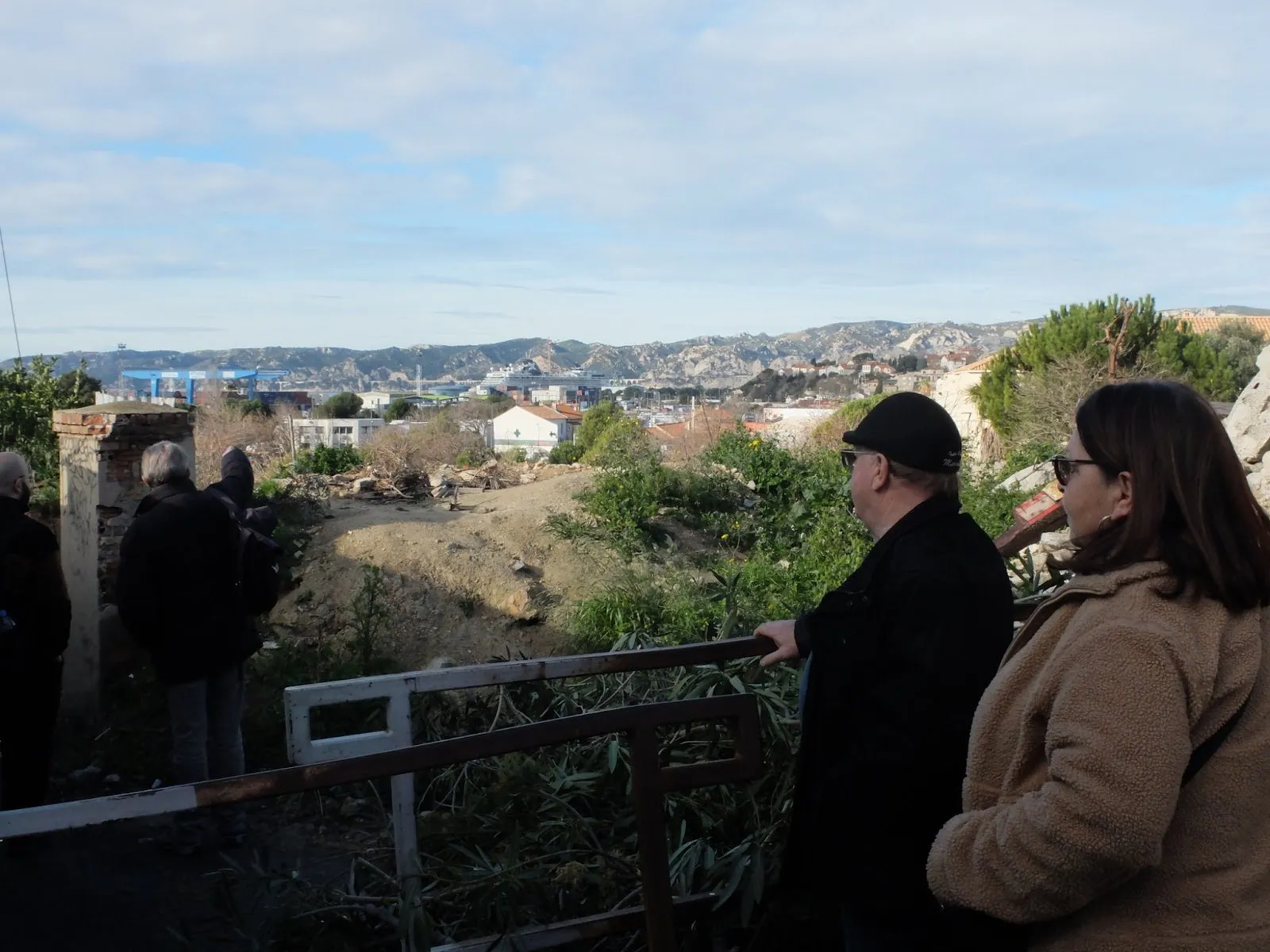
Further south, on France's Mediterranean coast, anger is building in Marseille's working-class northern districts over a planned data center development.
Patrick Robert, head of a comité d'intérêts de quartier (CIQ) in the city's 16th arrondissement, said he was not initially opposed to data centers. His long-standing concern had been pollution from the nearby Port of Marseille — including wastewater discharge and fuel emissions — which residents say have affected the area for years.
But opposition grew as plans advanced for a Segro data center in Saint-André, wedged between rows of post-war housing. The British property developer intends to build a 23,000 m² (250,000 sq ft) data center and warehouse complex, reportedly requiring a substantial 90kV double underground electrical connection.
The center, which is expected to be completed in 2029, is part of Segro's aggressive plan in which it raised $1.1 billion to develop up to 24 data centers across UK and Europe.
Residents argue the project would add to truck traffic and noise in an already burdened neighbourhood. Robert also questions infrastructure priorities, saying that electrical capacity that could serve docked cruise ships is instead being channeled to power the data center. There are additional concerns that the proposed 36-meter (118 ft) height exceeds local planning regulations, which limit buildings to 18m (59 ft).
Robert said his committee has secured a suspension of the project and a postponement of the prefectural authorization. They now intend to maintain pressure on authorities — even considering their first-ever street protest.
Lack of public consultation
Other local CIQs say they were sidelined during the public consultation process. Denis Pelliccio, whose wife Elisabeth heads a neighbouring CIQ in the 15th arrondissement, said he only learned of the meeting through a brief newspaper notice.
When he attended, he described what he saw as a tightly managed presentation portraying the project as clean, green and job-creating. "There was no room for debate," he said, adding that vague promises were made about funding projects for neglected public schools.
"The meeting fell flat — maybe 30 people showed up, including those promoting the project and local officials there to applaud, in suit, and not the residents actually concerned. That said a lot," he claimed.
Elisabeth, the CIQ head, said residents have vowed "not to keep quiet".
"If there's no confrontation of ideas, what's the point of saying 'bravo, bravo' in advance?" she asked.
This retired woman with a big accent from Marseille said she had never protested before, but this time, "we're going to say what we have to say — and fight."
Neither local authorities nor Segro responded to requests for comment regarding residents' claims.
Further information
If you would like to learn more about the local campaigns and organisations discussed in this article, you can find additional information from the No Es Sequía Es Saqueo collective and from Data for Good.
These links are provided for readers seeking further context. The Environmental Reporting Collective provides them as a source of additional information, and is not personally involved with any organisation or campaign.